Tag Archives: Consider Others

Sophomore Year Recap

If someone would have told me that we would be living with the current circumstances, I never would have believe them. Although these circumstances are not ideal, I believe the outcome can still be extremely powerful. How we all choose the react and handle what is going on is completely up to us. With that being said, I understand that everyone’s situation and experience regarding COVID-19 is different, therefore, there is not a specific way that an individual or group of people can go about this situation. Clearly, we all come from different backgrounds which means that everything going on right now impact everyone differently. The hard reality is that for some, this has been much easier to cope and handle, (being able to work remotely, continuing to be paid, having a SAFE place to live and “quarantine,” etc.), while for others, it has resulted in much harder and more severe cases (unemployment, inability to receive unemployment, mental health illness increase, diagnosis with nowhere safe to quarantine from others, death of a love one, etc.). It is very simplistic to say that we can all make light of this situation and it can be handled by taking very simple precautions. However, we do not live in a simplistic world. These matters are very complex and require folks to understand that their way of life is different from many, many others. This is what sophomore year has been teaching me.

Before coming into sophomore year, I was very ignorant to a lot of the topics that we have discussed in courses like PHL 118, COM 461, HST 221, CGL 145, and CGL 445. These courses have educated me on very important issues in our world, how to discuss them with others, and most importantly, how to take action in battling these issues (solidarity). I have never felt so educated, yet uneducated in my life. I’m learning so much and it makes me realize how much I do not know, and I love it. I can honestly say that I have never felt so passionate about education in my life after working with instructors like dr. jared halter, Dr. Elizabeth Carlson, Andy Blom, Shannon Jolliff, and others. These gritty dialogues, discussions, and sessions have turned into a burning passion of mine. I have fallen in love with not only fighting against the forms of oppression that I possess but also for other target/marginalized groups. The fight for others, in my opinion, is so empowering and humbling at the same time. But it’s not about me, it’s about them. I’ve grown such a passion for this work that I applied and been accepted to be a facilitator for CGL 145 and could not be more excited.

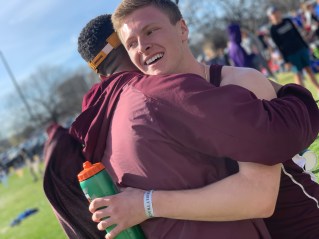
Coming into this year I was excited to be mentoring two fine young men!;) One of which I knew well from competing in track and field with since we were in the same conference and then also being able to come in a mentor someone completely knew that I had never met before! After working for a mentorship program over the summer and being absolutely humbled by the experience, I was very excited to continue in the role for others. My mentees are two awesome guys that I’ve loved getting to know and that I am very grateful for. Jackson and Luke have made my sophomore year very special and I am very excited to see how to these two grow over time and through their experiences at CMU!

This year I also experience a lot of changes on the track that have started to shape more of who I am. At the end of last year, I lost my event coach and it was very hard for our group to adjust to going into championship season. This year, having a new coach was a blessing. My coach is perfect for our group as a whole and myself individually. I am very grateful to him and our program for bringing in who I believe is one of the best coaches in the country. It has been amazing to have a coach who I can talk to about real things that don’t only consist of track but real life issues. (I’m just going to end it there on him because I could talk about my experiences with him for days).

This year I have faced many struggles of my own this year regarding mental health issues. I’m very grateful to my coach, RHD, and Tracy Castellon for assisting me through this time and getting me set up with the resources that I have. Through this, we decided the best course was to take on counseling and having me get set up with a service dog. So I now have a 4 month old service dog in-training that my sister, who trains military dogs (her foundation is 1 of 9 of the US Military’s vendors for dogs), police dogs, service dogs, therapy dogs, and normal house dogs, and I are working on training his together.

I am very grateful for what sophomore year has taught me and I am ready to take on the future.:))

Adaptation

Adaptive leadership is something that leaders use to motivate their followers. This model of leadership focuses on helping and motivating others to complete what they need to do versus doing it for them. Adaptive leadership is based off how people change and adjust their actions to new situations that arise. These types of leaders have specific behaviors that they possess and are able to apply to their everyday lives. The first behavior is they navigate a perspective and see the bigger picture of the situation (getting on the balcony). They can see that there is a greater purpose to what is happening. The second behavior is identifying adaptive challenges. This means that these leaders identify, analyze and diagnose each situation and emphasize on adaptivity. Regulating distress is the third behavior that these leaders portray. They provide methods to keep consistency by providing direction, protection, orientation, etc. Maintaining disciplined attention is the fourth behavior. This motivates people to focus on the tough work and how to positively confront change. The fifth is for the leaders to give the work back to the people. The leaders must be aware of how they impact the people they are working with and know when they should step back and let the followers to discover their own potential and how to handle situations. The final behavior is protecting leadership voices from below. These leaders must carefully listen to everyone. Overall, it is very important for these leaders to identify, analyze, motivate others to adjust, step back and listen.  

Lunch Buddies is an organization that needs leaders who are adaptive and can apply this model to it. This organization is a mentoring program that Central Michigan University uses to provide elementary students with a mentor who helps motivate them with school, nutritional choices, physical activity and as a role model.  

This program is wonderful is doing great things for the elementary students of the Central Michigan community. As far as problems go, I am not able to identify one. The way that I would apply this model to this program is by educating the mentors of this organization. This model can be used and applied to anyone, hence why it is known as adaptive. Mentors should be educated how to motivate young students and teaching them how to be adaptive. They need to be aware of this because the students they are working with at one point or another will be in a situation where they will need someone to motivate them, guide them and educate them in a way where the student can better handle the situation on their own. 

Mentors should be required to undergo a day long training session (similar to those of other leadership trainings like Spark, Rise or Purpose.) Here they will be educated on how to apply this model of leadership. They will learn the six behaviors of an adaptive leader, the strengths and weaknesses and an overview of why this is the necessary approach they are using. The reason this approach is best is because it allows the mentors to have a relationship with their followers (students), to motivate them but also provide them with guidance to handle situations on their own because the mentor will not be there to provide for them in situations that occur outside of their meeting times. This is the one and only step that I would change about the Lunch Buddies process. 

Adaptive leadership is a very valuable model to use. It allows a relation between the leader and the follower to develop, education for both the leader and follower takes place, the leader is able to provide direction but ultimately the follower is given the opportunity to decide what to do.  

Collaborative Leadership

There are many ways to view the relationship between leadership and followership. The two share many of the same characteristics that indicate that they are closely related, and one desires the presence of the other. Leadership and followership are like one another but are not the same thing, although they do work in collaboration with one another.

There is an immense amount of power in both leadership and followership and they work together in a coercive manner but, again, they are not the same. Leaders and followers collaborate to get different tasks accomplished but it is not always as simple as the leader leading and the follower following. It is a relationship in which the two people learn from each other, teach each other different things, guide one another, and build each other up. It is not a one-way relationship in which the leader does all these things and the follower listens and does them. They merge in this way but ultimately the leader is the person who is deemed to carry more wisdom, passion, and power, but must also remain open-minded to what their followers have to offer them. To assist in proving that these two ideas utilize one another and are very similar. The following will be used to do so: the article “The Leader-Follower Partnership: It’s a New Day,” and the two leadership models/theories, Blake and Moutons’ Managerial Grid/Leadership Grid, which doesn’t effectively describe followers and Situational Leadership Model which limits followers and leaders to be one of four ways.

As stated before, this bond between leader and follower is very close-knit and reciprocated. One does not work without the other. They have very similar characteristics. According to the article, “The Leader-Follower Partnership: It’s a New Day,” there are five dimensions of courageous followership. These elements apply not only to followers but are very important to leaders as well. The five dimensions are as followed: (1) “the courage to assume responsibility-” both leaders and followers assume and pick up responsibility for others who do not, the difference is that followers do not receive as much credit for doing these things. (2) “The courage to serve-” the leader and follower coincide to serve one another just for different reasons: the leader to motivate and the follower to make sure the leader will accomplish their goals. (3) “The courage to challenge-” the leader challenges their followers to make them grow as individuals, while the follower uses their voice to challenge the direction of leader and to voice opinions. (4) “The courage to participate in transformation-” leader change in order to encourage their followers and teach/learn from them the best way possible and the follower transforms to assist the leader and build them up and teach/learn as well. (5) “The courage to take morale action-” both the leader and the follower take stand when something is not morally correct that the other is doing. Although the reasons might be different behind why they do what they do, but leaders and followers do very similar things. After analyzing these characteristics, it is evident that followers and leaders are not the same because they have different purposes for doing what they do but they do a lot of the same things.

There have been methods that have been developed to declare good leaders and the relationship between leader and follower. However, these assume that a leader is only used to direct and tell their followers what to do. For example, Blake and Moutons’ Managerial/Leadership grid doesn’t even take followers into account. It only discusses the benefits of different leadership styles, tasks, and behaviors. Since leaders and followers possess similar characteristics, it is safe to assume that followers do a lot of these things as well. This is not a great use to measure leadership because it uses terms that are exclusive, doesn’t say anything about followers or situations, and grades and suggest that certain types of leadership are not acceptable, but again never takes situations into account. On the other hand, the Situational Theory is also very inaccurate by implying that leaders are only used to teach followers and followers are only there to do what they’re told to and by way of saying that there’s only one possible method to handle a situation. Neither of these charts suggest the greater meaning behind the leadership and followership relationship and what they both have to offer one another and how they are very similar.

Through cooperation leadership and followership work together and are very similar but not the same. These people generally do a lot of the same actions but have different reasons on why they do them. Leaders and followers must understand that they are here to serve one another in very similar ways and no person is better or higher up than the other.

The Power of Leadership

Power is a word that is very flexible and is used both positively and negatively when related to leadership. It is obvious that there are many leaders who abuse the power they are given whether its in a formal or informal situation. Power is seen as the influence and persuasion that a person carries when being related to leadership and is a necessity to have as a leader.

Whether or not they realize it, all leaders have power. It is used dangerously by some and has the power to ruin relationships, economies and society. However, it should be used to motivate and build people up. This power is something that some people are born with but is also taught. For everyone who poses this skill, it is certain that they must continuously shape and develop their use of power. Throughout the remainder of this article, the following will be covered: the influence of different types of leaders and how it impacts those around them and how leaders leverage power effectively. 

As stated before, the power that leaders possess will either tear people down or build them up. There are different types of leaders that portray characteristics of one side or the other. A coercive leader is a person that possess leadership qualities and potential but is not truly a leader. These people are demanding and are corrupt. They use their power in a demanding way and influence people through manipulation. They have a great amount of influence and power but they do not use it to motivate people. More than likely this is someone who was born with or developed a sense of power at a young age and never sought to develop it. These people have closed/fixed mindsets and are do not seek to change. They demand things from those who follow them and are not willing to learn from anyone other than themselves. Examples of people who behave this way are a boss, teacher, coach, etc. who has had success doing things their way a good majority of the time and have never wanted to learn something different and grow. These people are generally not well respected or admired. On the flipside to that, there are referent leaders: people who lead out of respect for those around them, seeking to build up those around them who also have a mutual respect for the leader. It is obvious that these leaders, who are human, make mistakes, however, the difference is that these leaders are willing to stop, dissect, and reflect what they must change. They are aware of their power and are willing to learn from what others around them have to offer. It is clear to them that leadership is not a one-way street. Their power is developed by those who follow them but also by those who mentor them. They seek change, growth, and development. Those who follow them see this and develop a great level of respect for these people. Examples of people who lead in this way: a boss, coach, or teacher who listens to their followers, values what they say, and address/change their methods due to this. These leaders understand people and what it takes to get things done properly with a sense of self-fulfillment.

 Since power, in terms of leadership, is used for both negative and positive reasonings, it is valid that leaders are taught ways to use their power effectively. Many of the methods demonstrate a valid indication of others over self. This is key for followers to see from the one who is leading them because it develops the perception of humbleness and respect which is a positive form of power. The following are top methods used to productively use power: 

  • “Make relationships a priority.” Not everyone is meant to have a strong relationship with one another. It is valid for a leader to be connecting with the right people. Both people with similar and different interest. People that will build them up and assist them to make change in the lives of others around them. Gaining trust from others as well as trusting them and how the two parties influence one another is a key component of developing relationships.
  • “Develop your brand of charisma.” Leaders must be willing to change small things that consist of behavior, not major characteristic changes that jeopardize their authenticity as a person. Seeking a mentor to assist in changing or growing these skills is essential in this objective of powerful leadership.
  • “Tailor your power to reward others.” Leaders must recognize, acknowledge, and congratulate people who achieve success. Focusing on praising their process and journey versus their success in the end encourages them to continue to work hard and stay motivated. 
  • “Teach others.” It is important for leaders to not hold in what they have to offer. They must let it out and develop those who follow them so they will have the same power and build up others as well. 

These methods of developing a leader that used their power effectively are mandatory in doing so properly and in an impactful way. 

People are starting to see more and more how closely related power and leadership are, and how power is the rooted from persuasion. However, power and leadership are not the same. Everyone must seek a leader that motivates and empowers them to be the best they can be.

Works Cited

Bal, Vidula, et al. The Role of Power in Effective Leadership. 2008, http://www.ccl.org/wp-Content/uploads/2015/04/roleOfPower.pdf.

“Relationship between Leadership and Power | Public Administration.” Political

Science Notes, 31 May 2017, http://www.politicalsciencenotes.com/essay/public-administration/relationship-between-leadership-and-power-public-administration/13638.

Community Service

Community service a person giving back to their community in anyway way, shape or form. There’s many different ways throughout the year that I have provided to the Mount Pleasant community as well as community back home in Muskegon. These community service events include cultural educational events, food drives and track events. Through these events I have become more educated on not only others but myself as well.

Through these events I was able to learn a lot. The things I learned from the cultural educational events I can apple to everyday life. These things live past the moment of interaction. Daily, I can continue to change the lives of other people instead of a one time encounter. Perhaps that is why these events are the most important to me, because they hold the most value. From volunteering my time at these events I learn how to interact with people better in situations where minorities, like myself, are made uncomfortable, left feeling hurt or misunderstood and how to overcome these situations. With hearing other people’s stories and wisdom I am able to help educate others on the same topic. Also, the food drive is an event back home in Muskegon where at my high school, Reeths-Puffer, we make over two-thousand boxed dinners for people on Thanksgiving Day. This event brings so much joy not only to myself but to so many other people because after this event, they feel as if they have a safe place on such an important holiday and they know that there are so many people that care enough about them to help feed them. Lastly, the track events are where people on the team volunteer our time to help educate younger people on track. These times are great because I am able to help educate people on something they love and are eager to learn about.

These are all great events and I have learned so much from them but now my job is continuing to grow. Pushing myself to volunteer in areas I’m not quite as comfortable in. An area where I am able to learn a lot more so I can continue to help shape myself as well as others. An interest I have is joining the group called Letter for Better next fall as well as Lunch Buddies. Writing has never been my favorite thing but it has a lot to offer and teach me and there is a lot of help I can do for others because community service isn’t about me, its about building and giving back to my community. Also, with Lunch Buddies I would have to go into a school that I have never been to, where I know no staff members or anything to help a kid in need. This would be huge for me because I enjoy being around people I know and having to be open with people I don’t know will be challenging but only for a short time. These are things that will help me as a person but more importantly my community.

RSO Involvement

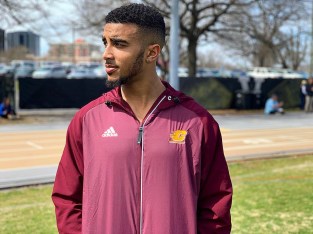
RSOs have a way of becoming some peoples’ lives. Although, my RSO is a little different, it still has taught me a lot and I look forward to what it will teach me in the future as well. Competing in a varsity sport at the Division 1 level is so much more intense than I could have ever thought. Between practicing for up to 20 hours a week, being enrolled in 15-18 credits, working a job, trying to have a social life, traveling half way across the country week after week and fulfilling any other outside commitments is more than a hassle. Our program and Central Michigan University is a combined men’s and women’s program IMG_9509with 4 assistant male coaches and a female head coach. The program has seen coaches that are national champions and Olympians, as well as producing a great number of All-Americans.

This RSO is teaching me a lot on how to deal with failure, frustration, disappointment and patience. This year was not anything that I had ever expected to be. It was much worse. So many things had just gone in the opposite direction that I wanted them to go. First of all, I didn’t set a personal best in a single event this year. Talk about frustration. Working my butt off all summer, doing everything my coach provided me with and more to see no positive outcomes from any of it is more than frustrating and disappointing. Putting my heart into everything I did, warm up, practice, weights, recovery, nutrition, academics.. Doing everything right and seeing no positive outcomes on the track is very upsetting.IMG_9513

Honestly, I cannot tell you a “Now What” from all of this. There is so much that has happened that has left me with so much disappointment for myself. The things I do know is that I will not give up. This may sound very cliche but this summer I will continue to work harder than I ever have, push myself somewhere where I have never been before and stay focused. I cannot and will not go through another year of failure, frustration and disappointment the way I have this year. I also know that this summer I will be seeking professional assistance to help me get break through these hard times that I am going through not only on the track but socially. This RSO is still teaching me so much about myself and that is why I will be seeking professional help this summer to help me discover what the reason behind all of this is and help me overcome some underlying magic as well. I have struggled a lot socially this last month, I have realized that and I am seeking help to overcome all of this. So hopefully in the future I have a story about how I overcame a very disappointing and upsetting time in my life so I can be there for other people who are going through something similar as I did so I can get them help as well.


LDR 200L Reflection

This course had me very confused for about a month. I didn’t understand the flow for so long. Class began slowly syllabus week, as did every other class, then we got in to content but then class was cancelled multiple times during the horrible winter “bliss” we were so blessed to see, the syllabus was changed about six times.. I had nothing to feel other than confusion. However, this class was a turning point for me in the Leadership Institute. I began to feel more at home with my cohort, with the staff and in the LI in general. I began to feel a sense of belonging. The turning point was the day when Shamir spoke up in class and brought up a very hard topic to be discussed. The topic of minorities across the board being underrepresented in the Leadership Institute as well as on our campus. I am very proud of her for standing so boldly for what she believes in.

This for me was a call to action. Talking about it was no longer enough. Everyone is aware of the lack of diversity at Central Michigan University. This is no surprise since the school was founded as a “safe-white-school” where white students could attend and not feel threatened. After class I began talking with Nolan and Shamir. Slowly more and more people became interested once they saw us talking after class. For the love of the university, we want to see change, we want to see education, we want to see cultural inclusion. Our group is very grateful for everything that the LI has done since this day to encourage us by bringing in speakers and advisors to help us and guide us down this path of education and recruitment. We all have things to learn about each others  culture and to do this, we have to find people who are different from us and let them educate us. We must reach out to others and ask for their support through our ignorance. Ignorance is not always our fault; yet, we must still take responsibility and be vulnerable and go seek education on different cultures.

This group of students that has formed, plans to use models, approaches and guidance we have learned from this course to go out their, educate others and help give everyone and equal platform to get to be students on Central’s campus. This is an opportunity that everyone is given but not everyone is able to capitalize on due to lack of resources. Whether that is technology, counselors, family support, or whatever the case may be, our group wants to help people overcome these obstacles as much as a group of hungry students can. Another way of helping the environment of CMU’s campus is by educating people as much as possible on a day to day basis. Although challenging, it must be done, however, in a professional manner. It is key not to force information down someone else’s throat as well was putting someone else in too much of an uncomfortable setting. This group, through education and support of this course, plans to do great things to enhance the lives and culture at Central Michigan University.

LDR 100 Reflection

Push. If I were to use one word to describe Leadership 100, it would be push. This class for me was a struggle. It required me to have to push through things that perhaps only few others did as well. These reasons that I had to push were normal reasons for someone, especially in their freshman year, to go through. The reasons why I had to push in this class were simple but still valid. The first was because I lived all the way across campus, so physically, somedays, I literally had to push myself out of bed or out of the door or out of practice to walk to Powers from East Campus. Simple but a true immature, freshman struggle. The second reason was time. I felt like I never had time to go to this class because of the time commitment to get in mandatory study hours through athletics, practice times, as well as studying for the 16 other credits that I was in. The third and final reason also had to do with me living away from the cohort. I felt a disconnect from the group. Everyone was beginning to get closer as I was only spending an hour with them each week.

The pushing I had to do in this class was very hard and a struggle at first. I didn’t understand why I was put in this place of struggle (although I never do during it), but I knew I had to be patient in it. Although it was very upsetting and frustrating, I’m happy for everything I was going through at the time. For reason one: This struggle helped me with pushing to go to all of my classes, whether I enjoyed them or not, because it’s why I’m here: to go to class and get educated. For the second reason: This exhausting schedule  helped to prepare me for future busy schedules. It taught me how to communicate with professors, advisors and coaches when I’m feeling flustered and need a break somewhere. Finally, for the third reason: Although I didn’t get to live with the cohort and missed out on loads of fun and memories, after time, more and more people saw the disconnect and more and more people invited me into their groups.

This time forced me to reach out to other people and seek help. It pushed me outside of my comfort zone. I’ve never had a problem communicating with people (obviously since one of my strengths is woo) but I have always had a problem with asking for help and telling people that I am struggling. This course, although not through direct content, taught me a lot about myself. This class was not challenging and did not require a lot of intelligence but it was more educating on getting to know yourself and the cohort. I learned about my strengths and have been educated on how to use them in day to day interactions to enhance leadership, relationships with people, as well as serving people. Learning all these different things about myself, I plan to use them all to build up others as well as myself wherever need be.

Spark Leadership

Spark was an event that I was very excited to participate in because AJ had not yet done it and I knew a lot of other people that were participating and I knew a lot of the people who facilitated the event. When we arrived the first of the three Wednesday nights, we were assigned a booklet with a number on it with a group number on it. At first I didn’t know anyone on my team but that was quick to change. I was the only guy that was on my team and the girls were very upset to find out that I was a cat person and very anti-dog when we did the five finger game. (I was voted off the island almost instantly.) My outgoing personality helped me to make quick connections to people within my group and others around us.

I was very comfortable in the space since the first two sessions were conducted in a familiar room, the Power’s Ballroom. My favorite activity that we did throughout Spark was on the first night when we figured out what color our personalities were. It was very exciting because we got to connect with other people that were the same color as us. (I was an orange.) Our group had a very hard time getting things done at first because we all wanted to talk and meet new people, hence the true orange coming out of us.  Ellen, a junior in LAS, was my group facilitator and we had a very great time messing with and getting to know each other. She was not surprised to see that I was an orange because of how crazy of a person I am. Although I don’t like dogs, I had a good time on the last night, in the Rotunda, making dog toys for dogs within the humane society because I like to make people and knowing that I put a smile maybe not on a human’s face but somethings face, made me happy.

This event made me feel very inspired to make an impact here on campus after we listened to the panel speak on the last night. The panel was comprised of wonderful people here on campus that are involved and play big roles here on campus and have the ability to change people’s lives, which they do. This inspired me to do the same. How exactly, I am not yet sure, but I know it starts with being myself and making others feel welcomed, included, and loved the way those leaders on the panel do.

Mentor/Mentee Retreat

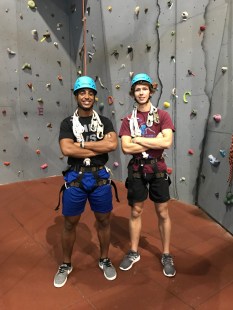
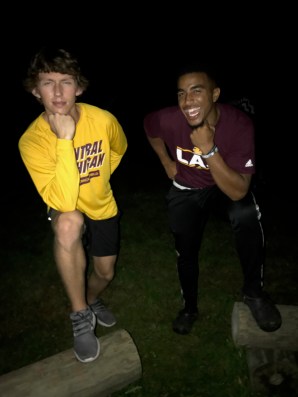
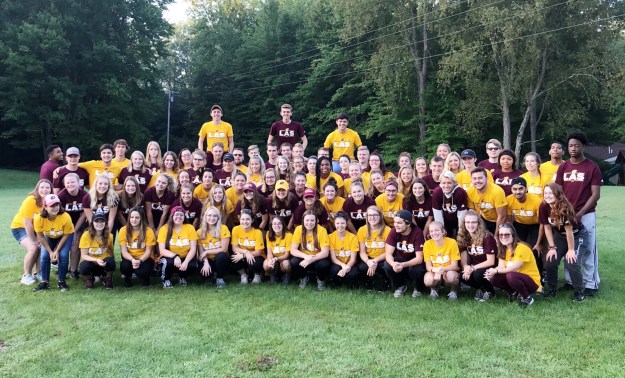
Truthfully, I had no expectations going into the Mentor/Mentee Retreat whatsoever. I was fully confident since I already had a strong relationship with my mentor going into it. Also, my extraverted and woo like personality makes it very easy for me to make friends and connections to knew people. I was actually very excited to go on the retreat actually , to meet and get to know the people in my cohort more (since I don’t get to live with them…) and in the cohort above me. The only time I truly get to see the other people in my cohort is during class or randomly around campus.IMG_8390


My mentor, Aaron Jay Frens, but most of you beautiful people most likely know him as AJ, were very enthused to get away from campus for a weekend and spend some quality time together, even though we were already very close. Funny story, actually, when we arrived to Eagle Village I started crying when I was told we had to walk to our cabins because that week was a very hard training week and my legs were so dead that I didn’t think I was going to make it there. Don’t worry, I was able to get over myself after AJ
laughed at me. For the rest of the weekend, we were granted free

IMG_8393

access to meet and connect with new people in many different ways, whether it was at meals, during leadership building activities, free-time, the campfire, or the high-ropes course. Again, since AJ and I don’t have the opportunity to live with our cohorts, this time that we get to spend with the others is very special to us. Honestly though, on a real note, I’d be willing to argue that AJ and I are the closest Mentee/Mentor match up out of anyone in LAS.

This trip made me actually feel connected to more people within the group because before it I had only known about five or six people. Leaving this trip, I felt confident enough to come back to campus and actually say hi to these people and converse with them when I saw them around campus or in class. Even though AJ and I were already very close before the Retreat but it was pretty cool because we got to have some cool one-on-one talks where we don’t get to as much on campus because we are with our other teammates a good portion of the time as well. But outside of AJ I was also very grateful to go because I was able to get to know the others in my cohort.IMG_8389